Bohemian
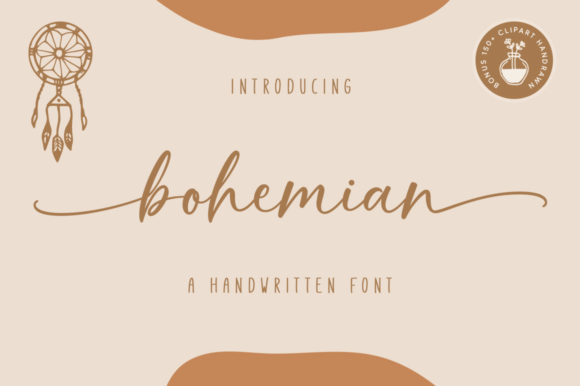
There’s a quiet magic in typography that feels both effortlessly human and deeply intentional—Bohemian is one of those rare handwritten fonts that delivers authenticity without sacrificing polish or professionalism.
A Timeless Handwritten Font with Modern Utility
Bohemian isn’t just decorative—it’s purpose-built for clarity, charm, and creative flexibility. As a PUA-encoded font, it grants immediate access to an expansive set of glyphs, alternate characters, ligatures, and elegant swashes, all activated with standard keyboard input. That means no complex OpenType panel navigation or design software workarounds—just intuitive, expressive typography right out of the box. For designers juggling tight deadlines across branding, web, and print projects, this level of usability directly supports a smoother, more confident design workflow.
Where Bohemian Shines in Visual Design
Its organic flow and subtle variation in stroke weight make Bohemian especially effective in contexts where warmth, personality, and approachability matter. Unlike rigid script fonts that can feel overly formal or dated, Bohemian balances whimsy with restraint—making it ideal for brands seeking emotional resonance without compromising credibility.
- Logo design: Works beautifully as a primary wordmark for lifestyle brands, artisanal businesses, wellness studios, and creative agencies—especially when paired with clean sans-serif secondary type for contrast and hierarchy.
- Social media graphics: Elevates quote posts, event announcements, and product reveals with visual distinction—helping content stand out in fast-scrolling feeds.
- Packaging & editorial design: Adds tactile appeal to labels, book covers, and magazine spreads where storytelling and sensory experience go hand-in-hand.
- Digital marketing assets: Enhances email headers, landing page hero text, and banner ads—supporting brand recognition while reinforcing tone of voice.
Because Bohemian scales well across sizes and mediums, it performs reliably in both high-resolution print (think business cards or boutique packaging) and responsive web environments (like hero sections or mobile-first UI components). When used thoughtfully—with attention to spacing, contrast, and supporting color palette—it strengthens visual hierarchy and guides the viewer’s eye with intention.
Using Bohemian with Intention
Like any expressive typeface, Bohemian benefits from strategic application. Reserve it for moments of emphasis: headlines, signatures, short quotes, or key brand messaging—not body copy or dense interfaces where readability must come first. Pair it with neutral, highly legible typefaces (such as geometric sans-serifs or warm humanist options) to create balance and maintain accessibility.
Consider your audience and context carefully. A luxury skincare line may use Bohemian’s soft curves to evoke craftsmanship and care, while a children’s educational app might lean into its friendly rhythm to signal playfulness and trust. In either case, consistency matters: apply the same swash variants, kerning adjustments, and color treatments across touchpoints to reinforce brand identity and build recognition over time.
Also keep technical compatibility in mind. While Bohemian renders beautifully in modern browsers and major design tools (Figma, Adobe Creative Cloud, Sketch), always test how it appears on various devices and operating systems—especially if embedding in web projects via @font-face or variable font stacks. Exporting key phrases as vector outlines for logos ensures fidelity across platforms and prevents rendering inconsistencies.
In today’s saturated digital landscape, thoughtful typography remains one of the most accessible yet powerful tools for elevating creative projects. Bohemian doesn’t shout—it invites. It doesn’t overwhelm—it connects. And when aligned with strong visual design principles—intentional color choices, smart composition, empathetic UX considerations, and cohesive brand strategy—it becomes far more than a font: it becomes part of the story your brand tells, every time it’s seen.