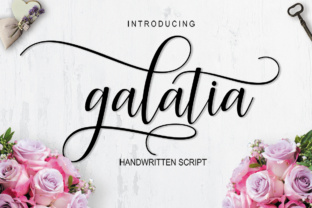
Galatia Script: Handwritten Charm, 440+ Glyphs
Galatia Script is a beautifully crafted handwritten font designed to bring warmth, personality, and authenticity to digital and printed work. Unlike generic script fonts that rely on just a handful of letterforms, Galatia stands out with over 440 unique glyphs—including stylistic alternates, ligatures, swashes, flourishes, and contextual variants. That means the letter “a” might appear in five different elegant forms depending on its position in a word—and the same goes for “t”, “e”, “r”, and many others. It’s not just decorative; it’s intelligent handwriting brought to life digitally.
Why Designers and Creators Choose Galatia Script
People reach for Galatia Script when they want text that feels human—not algorithmic or overly polished. It’s ideal for projects where tone matters as much as content: wedding invitations, boutique packaging, personal branding, social media graphics, or even course landing pages. Because it mimics natural pen strokes—slight variations in weight, subtle entry/exit strokes, and organic flow—it avoids the robotic repetition common in simpler scripts.
Take a small business owner launching a handmade soap line. Instead of using a stock script font that looks like every other artisan brand, they apply Galatia Script to their label tagline. Instantly, the product feels more thoughtful, more intentional. A freelance educator creating printable worksheets for kids adds Galatia Script headers to make learning materials feel inviting—not clinical. These aren’t gimmicks. They’re subtle but meaningful shifts in how audiences perceive trust, care, and attention to detail.
Where Galatia Script Fits Naturally
You don’t need design experience to benefit from Galatia Script—but knowing where it shines helps you use it well. Here’s where it works best:
- Branding & Identity: Logos, monograms, and wordmarks for creative professionals (photographers, florists, calligraphers) who want their name to reflect their craft.
- Digital Content: Instagram story headers, Pinterest pins, email newsletter banners—even subtle use in Canva or Figma layouts adds visual distinction.
- Printed Materials: Invitations, menus, certificates, and greeting cards gain tactile appeal, especially when paired with quality paper and thoughtful layout.
- Educational Tools: Teachers and course creators use Galatia Script for titles and section breaks to soften dense content and guide attention gently.
- Web Typography: When embedded properly (via @font-face or font hosting services), it enhances hero sections or testimonial quotes—just avoid body text, since readability at small sizes isn’t its strength.
Realistic Use Tips for Beginners
If you’re new to Galatia Script, start simple. Try replacing just one headline in your next project—not an entire website or brochure. Open your design tool, type a short phrase like “Handmade with Care”, and enable OpenType features like stylistic sets or contextual alternates. You’ll see letters shift and connect organically. That’s the magic: Galatia Script adapts, rather than repeats.
Also, pair it wisely. Its richness pairs beautifully with clean, neutral sans-serifs (like Inter, Lato, or Montserrat) for contrast and balance. Avoid stacking multiple decorative fonts—Galatia Script carries enough presence on its own.
What Makes Galatia Script Different From Other Handwritten Fonts?
It’s not just the glyph count—it’s how those glyphs behave. Many script fonts offer 20–50 alternates, often requiring manual swapping. Galatia Script uses advanced OpenType programming so your software automatically selects the right variant based on context. Type “love”, and the “o” and “v” may connect with a graceful curve; type “love letter”, and the “e” at the end of “love” changes to support the “l” that follows. That level of responsiveness saves time and elevates consistency.
And because it includes punctuation, numerals, and multilingual support (including extended Latin characters), it’s usable beyond English-only contexts—great for bloggers writing in Spanish or educators preparing bilingual handouts.
Things to Keep in Mind Before Using Galatia Script
First, licensing matters. Galatia Script is typically sold as a commercial font—meaning free use on personal blogs or school projects may be allowed, but selling products that feature it (like printables or templates) usually requires a proper license. Always check the vendor’s terms.
Second, performance counts. If you’re embedding it on a website, consider file size and loading impact. Some versions include web-optimized WOFF2 files; others are desktop-only. For fast, accessible sites, limit Galatia Script to key visual elements—not navigation or long paragraphs.
Third, accessibility is part of good design. While Galatia Script is highly legible at medium to large sizes, it’s not suitable for low-vision users or screen readers parsing body copy. Use it for emphasis, not explanation.
Who Benefits Most From This Font?
Freelancers building standout portfolios. Bloggers wanting to differentiate their quote graphics. Small shop owners crafting memorable packaging. Educators designing engaging classroom resources. Even marketers testing emotional resonance in email subject lines or ad headlines.
It’s especially helpful if you’ve ever thought, “My designs look nice—but they don’t quite *feel* like me.” Galatia Script doesn’t replace voice or vision—it amplifies them. It gives your words texture, rhythm, and quiet confidence.
A Final Thought: Quality Over Quantity
Having 440+ glyphs sounds impressive—and it is—but what matters more is how thoughtfully those glyphs were drawn and programmed. Galatia Script was built by designers who understand letterform relationships, spacing subtleties, and real-world usage. That shows up in how smoothly “th”, “st”, and “ct” connect, how numbers align with text height, and how easily you can switch between formal and playful tones using different stylistic sets.
You don’t need to master all 440 glyphs to get value. Start with one alternate, one swash, one connected pair—and notice how it changes the mood of your message. That’s where Galatia Script earns its place: not as a trend, but as a reliable, expressive tool for people who care about how things look—and how they make others feel.